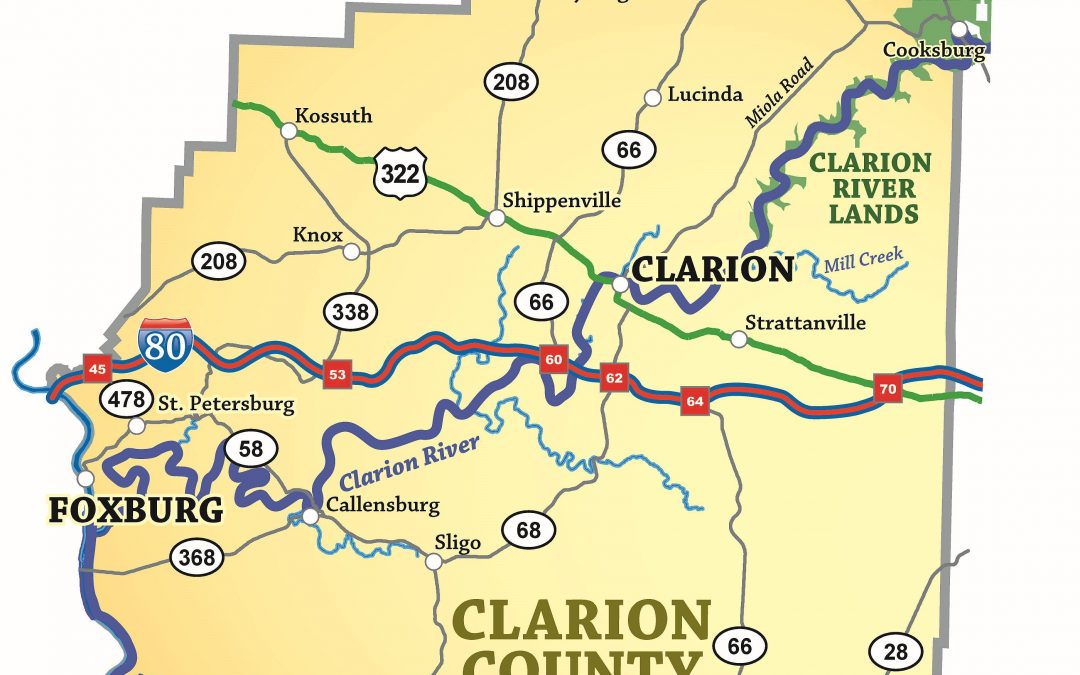
This story originally ran on ExploreClarion.com
It was around 11:00 p.m. on the night of October 14, 1885, when a knock was heard on a cabin door, near the Forest-Clarion County line. Wilderness and untamed forest surrounded Daniel McSweeny, a Secret Service agent as he knocked.The door opened and an older, bearded man answered.
“Are you Mr. Buck,” the lawman asked.
“I am,” replied the old man.
“I have a warrant for you,” said McSweeny. “Come out and get in the wagon.”
“I want you to read that warrant first,” the old man asked of the federal agent, to which McSweeny agreed.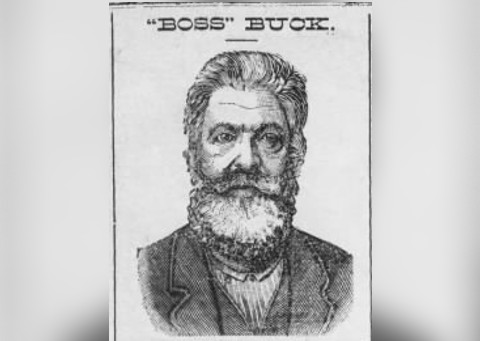
Seizing the opportunity, the old man pulled out a knife and tried lunging at the agent, but he was too slow. Age had caught up to him, and McSweeny grabbed his wrist and then his other arm. A second Secret Service agent, who had been hiding until that moment, came and helped his colleague subdue the old man, pushing him face-first into the ground. Handcuffs were produced and placed on the wrists of the old man, ending the criminal career of one of Clarion County’s most infamous outlaws – “Boss” Buck. A horse thief and counterfeiter, Buck is remembered for his daring exploits, his charisma, and his Robin Hood-like reputation. In his 60s at the time of his last arrest, Buck lived at the edge of society.
He first made his homestead in Beaver Township and later, in the 1870s, moved to a Washington Township farm near the modern-day Wolf’s Corners Fairgrounds. Little is known about Buck’s early life. The Clarion Democrat states he was athletic and strong, and though he lacked formal education, he was “a man of unusual intelligence and resources” who could “have stood as high amongst the most prominent men of the country as he ranks among the most noted criminals.” He was a family man, too, being a father to ten children with his wife, Elizabeth. Even so, Buck is most well-known for being the leader of a multi-state horse thief ring during the mid-1800s, as well as being a notorious counterfeiter.
Gang of Horse Thieves
How Buck became involved in horse rustling is unknown; although by the early 1850s, it is likely Buck was involved in some sort of horse dealing. It was the Civil War that expanded his business. As the nation tore itself apart through four years of bloody fighting, Buck saw an opportunity. The army needed horses and took them from local farms and businesses, creating a horse shortage for non-military purposes. This is where Buck stepped in. He and his gang of thieves operated from Canada to Kentucky, stealing the best horses anywhere they could find them. Buck was careful to cultivate his image, never stealing from the poor, taking only from those better off. Buck’s largest innovation was moving and hiding the stolen horses, creating an “underground railroad” of stolen horses. He is quoted saying: “Any thief can steal, but it takes a wise man to hide.” Never participating in the thieving, himself, Buck would point his gang towards where they could find horses. Once stolen, they would constantly move the horses from state to state, hiding them in various inns and taverns with which Buck had negotiated safe harbor. He would also bribe local law enforcement to turn a blind eye to his activities. Additionally, Buck would change the appearance of stolen horses. From his various hideouts, he would paint horses in different colors so their owners would not recognize them. If a horse was not a work horse, he would scrape the hair off the parts of the animal where the collar and other parts of a harness would have done so. Buck also provided safe passage to other outlaws needing to remain incognito. Using his large network, he would hide others until it was safe for them to move on. Lastly, Buck was careful to present a good image. A naturally generous man, Buck was friendly with his neighbors and did not steal horses near his home.
Buck’s reputation is such that Knox Borough’s Horsethief Days festival is named in honor of his exploits. He was never arrested for horse-thieving. It was Buck’s other criminal pursuit, his career as a counterfeiter, that was his downfall.