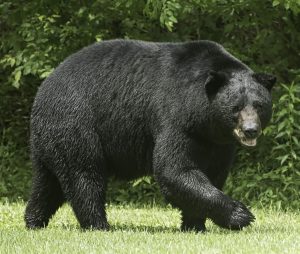
The American black bear is one of Pennsylvania’s most iconic and elusive wild animals. With an estimated population of 18,000 to 19,000 across the state, black bears thrive in the dense woodlands and rugged mountains of Pennsylvania’s Great Outdoors Region (Cameron, Elk, and Forest Counties). These solitary mammals can weigh between 200 and 600 pounds, with some males exceeding 700 pounds. Despite their size, black bears are agile climbers and swimmers, often using their physical prowess to find food or evade threats.
Black bears are opportunistic omnivores, feeding on a wide variety of foods depending on season and availability. In the spring, they feast on young green vegetation, insects, and carrion. Summer brings berries and soft fruits, while autumn is dominated by high-calorie mast crops such as acorns, beechnuts, and hickory nuts. They will also raid cornfields, beehives, and occasionally garbage cans if natural food is scarce. Their fall feeding frenzy is crucial, as it helps them build fat reserves for winter hibernation.
By late fall, black bears retreat into dens—often hollow trees, rock crevices, or dug-out root systems—to begin hibernation. In Pennsylvania, this typically begins in November and lasts until March or April. While in the den, bears enter a state of torpor, during which their heart rate and metabolism drop dramatically, yet they remain alert enough to respond to danger. Female bears (sows) give birth during hibernation, usually to one to three cubs in January.
Bears prefer large, unbroken tracts of forest habitat, particularly those with dense understory and abundant natural food sources. While once restricted to the northern counties, today black bears are found in over 60 of Pennsylvania’s 67 counties, a testament to successful wildlife management and conservation efforts. These intelligent, powerful animals remain a vital part of the state’s wild heritage.
 Population History
In the 1970s, Pennsylvania’s bear population was just 4,000–5,000.
Today, it has rebounded to around 18,000–19,000 statewide
Estimation methods include tag-and-release studies, bear sightings, and harvest data modeling.
2024 Statewide Bear Harvest
Statewide Summary
Statewide total: 2,642 bears harvested
Counties with zero harvests: Beaver and Allegheny
Highest county: Tioga (163)
56 Counties reported at least one bear harvested
PA Great Outdoors Region
Cameron County 56
Elk County 44
Forest County 48
Plan your wildlife viewing adventure at VisitPAGO.com.