Abundant wildlife species can be found in Pennsylvania’s Great Outdoor region. Commonly seen animals include elk, black bears, deer, eagles, ospreys, coyotes, river otters, foxes, raccoons, bobcats, various small mammals, and a large variety of birds. As our name suggests, Pennsylvania’s Great Outdoors region is home to a wide variety of wildlife and vast woodlands and clear waterways. In Cameron, Elk, and Forest Counties animal enthusiasts can find somewhere to enjoy seeing their favorite species.
Elk Viewing
When you’re looking for elk, you need to pay attention to everything in the woodlands, fields, and meadows. The Shawnee name for elk, wapiti, meaning “white rump,” and often that is the first part of the animal you will see as their brown bodies blend in with the natural surroundings. As a rule, when you see people looking in the same direction with phones, cameras, and binoculars in hand, you can figure elk are nearby.
 More than 1,400 elk can be seen roaming the mountains and valleys of Elk and Cameron Counties. The fall breeding season for elk is known as the “rut.” It is the most popular and exciting time to visit Pennsylvania’s Wild Elk Country. Hearing the bugles and belly grunts of bulls as they defend their harem from other intruding bulls is a thrilling experience you’ll never forget. With some luck, you might even get the chance to see two equally matched bulls square off, lock horns, and then the battle is ON!
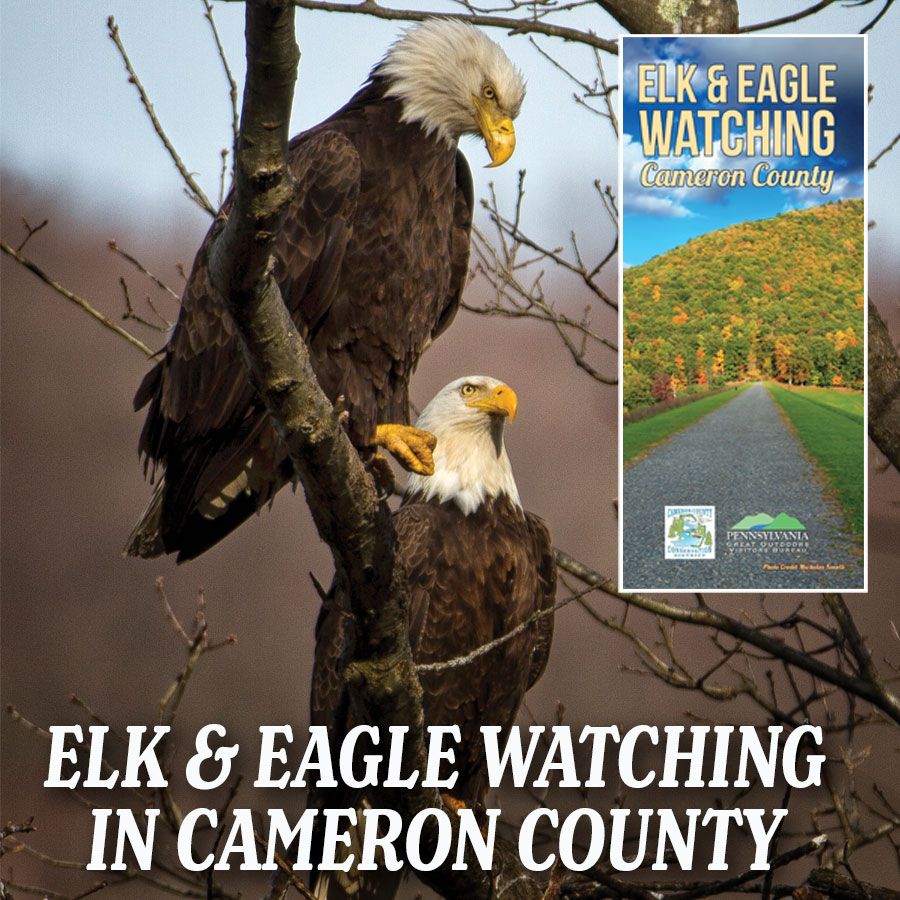
To maximize your elk viewing time, remember that elk, deer, and most larger wildlife species are most active right after dawn and just before dusk as they move from bedding areas in sheltered woodlands to more open feeding areas, so time your efforts accordingly for the most wildlife sightings. A popular option is to spend some time on the Elk Scenic Drive, a 127-mile route through the region. Distinctive signage along the route will guide you to the best places to see elk and other wildlife, as well as some of the region’s most scenic views. Download or request free elk and eagle watching guides at VisitPAGO.com/free-information.
Elk Country Visitor Center
The Keystone Elk Country Alliance manages this stunningly beautiful conservation and education center in Benezette, which features touchscreen exhibits, a 4D sensory-surround theater that puts you in the middle of the elk herd, wildlife displays, wildlife viewing blinds, a panoramic mountain overlook, and walking paths for visitors. The meadows and food plots around the center attract wildlife including elk, whitetail deer, and wild turkey.
Each July, the center hosts the annual Elk Expo and spans two days of family fun featuring live music, artists, crafts, educational seminars, and outdoor industry vendors. Call (814) 787-5167 or visit ElkCountryVisitorCenter.com for more information and hours.
Wildlife Center at Sinnemahoning State Park
Sinnemahoning State Park is best known for bald eagles soaring overhead and the famous Arch tree. It is also home to wild elk, coyotes, bobcats, black bears, river otters, whitetail deer, and lots of beautiful bird species and other wonderful wildlife. Start your visit at the park’s eco-friendly Wildlife Center and learn about wildlife-watching opportunities, photography, conservation history, stewardship practices, and ideas for exploring the region. The center also has interpretive exhibit galleries and an artisan shop.
Where Eagles Fly
At George B. Stevenson Reservoir at Sinnemahoning State Park, eagles and osprey are often seen. For several decades pairs of eagles have set up year-round residences. During the summer the park offers pontoon boat eagle-watching excursions. Bald eagles are also frequently spotted along the Sinnemahoning Creek Watershed throughout Cameron and Elk Counties, the Wild & Scenic Clarion River from East Branch Lake in Elk County to Cook Forest State Park in Forest County, and along the Allegheny River near Tionesta, Tionesta Lake, and Buzzard Swamp near Marienville.
For the Birds
Bird watchers flock to Ridge Road near Sinnemahoning State Park, Buzzard Swamp, and Cook Forest State Park with binoculars and cameras in hand. The National Audubon Society has designated Cook Forest State Park as an important birding area. From warblers twittering in the bushes to swans paddling on beaver ponds, Pennsylvania’s Great Outdoors region offers a lot for bird lovers to enjoy. Waterfowls such as ducks, geese, and swans make their homes on the waterways. King Fishers, cliff swallows, indigo buntings, owls, hawks, hummingbirds, vultures, woodpeckers, Eastern wild turkey, and many other resident and migratory bird species can be found in the trees, on the ground, and in the skies here.
Go to VisitPAGO.com to plan your wildlife adventure in Pennsylvania’s Great Outdoors Region.